
Maritimes, part 1 - NB, PEI & NS

Updated: Jul 23
We covered a lot of ground on this trip, catching the highlights in these three provinces in one week before taking the ferry to Newfoundland where we spent three weeks. I had to keep reminding myself that we were in Canada. The Maritimes hold so much history and European influence. I heard more french being spoken than english. Not a day went by that we didn't smell or see the sea. The lighthouses, coves & bays, fishing vessels, sea birds and bright colored houses were a sight to soak in. And catch on camera. Let my pictures tell their story...
June 8 - flew to Charlottetown, PEI

We landed in Charlottetown at midnight, BC time being 8:00pm. By the time we got to the basement suite, we were all good and tired.
June 9 - Walking tour in Charlottetown / Anne of Green Gables Museum / Parlee Beach

We started the trip with a walking tour by the historic harbours of Charlottetown. This statue is of William Henry Pope, colonial secretary of PEI. He's being rowed out to welcome the delegates from the united provinces of Canada (current day Quebec and Ontario) to attend the Charlottetown conference in 1864.

St. Dunstans' Basilica's northern tower holds 18 bells.

The north corner of this building was constructed in 1812 and used to be named the Wellington Hotel. It was the center of a lot of social activity in town, housing Nova Scotia delegates.

Tulips and Daffodils? They're a few months behind, aren't they? Apparently just days before we arrived, they still had snowfall. Several locals said they'd had a particularily cold wet spring. The Atlantic keeps the climate colder than our west coast.
Most of these structures were built before 1864. In 2022 a hurricane demolished 70% of the trees in this area.


Anne of Green Gables

This farm (now named Silver Bush) belonged to five generations of the Campbell family. It was frequently visited by their niece, L Montgomery. She was the author of 20 novels of which three had their settings on this farm. Her first novel, Anne of Green Gables was written in 1908.

There were a lot of gravesites with larger tombstones, often facing the ocean. None of these were older than the 1800s.
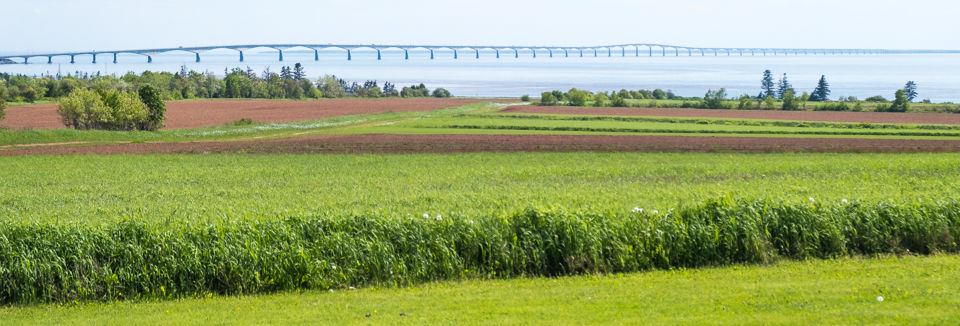
Confederation Brige is 12.9 km long and joins PEI to New Brunswick. It was a 1:30 hour drive to Parlee Beach.

This park boasts the warmest salt water in Canada.


We spent the night close to the beach at the Cozy Cottage vacation home. Most of our accomodation provided kitchenettes. We had a collapsible insulated bag in which we stored our grocery items during the day. Frozen bottles of water helped keep it cool. It was only the last two nights on this 4 week trip that I ate in a restaurant. No kitchens meant wraps and tins of meat for dinner.
June 10 - Bay of Fundy, Hopewell Rocks
160 billion tons of water move in & out of the Bay of Fundy twice every 25 hours. That's an amount comparable to the average 25-hour flow of all the rivers in the world combined! The tidal fluctuation of Fundy's tides are the highest in the world. They're powered by the gravitational pull of the moon and the sun.

The Bay of Fundy has an enormous intertidal zone due to its record breaking tidal range. Not only does the tide rise 46' vertically, but it also receeds almost two football fields horizontally.


Water between the conglomerate cracks expands and contracts as it freezes and thaws. This puts great pressure on the cracks, forcing large chunks to calve causing separation of the flowerpots from the cliff line.


The Elephant.

Daniel's Flats are 4km wide. The oxidized sandstone washed in from the limetone cliffs gives it a red hue. It reminded us of quicksand. When we threw a rock into it, it plopped and then in slow-motion got sucked in and disappeared. Mud shrimp provide a tastey treat for migrating birds.
Fundy National Park was just a half an hour drive south of the Bay of Fundy. The park encompasses some of the last remaining wilderness in southern New Brunswick.
Dickson Falls was a nearby 1.4 walk.

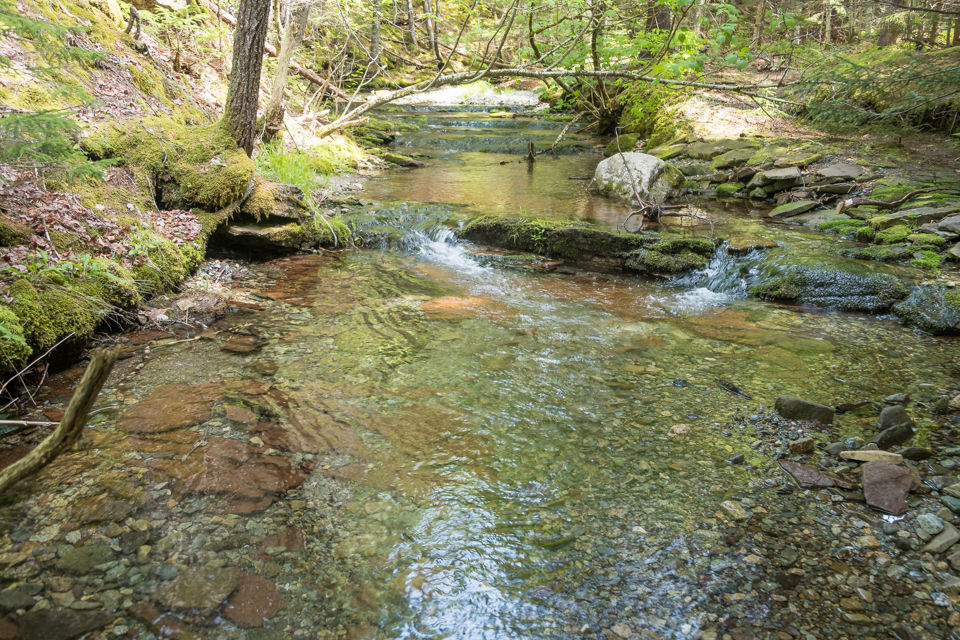


The Point Wolfe historic bridge and 1.9 km trail is part of the Trans Canada Trail.

Remains of an old logging dam in the river's estuary.


A John Muir quote on the railing.

I startled this unaware couple when I approached from behind. They promptly pulled apart but I asked them to resume holding hands so I could take this photo.
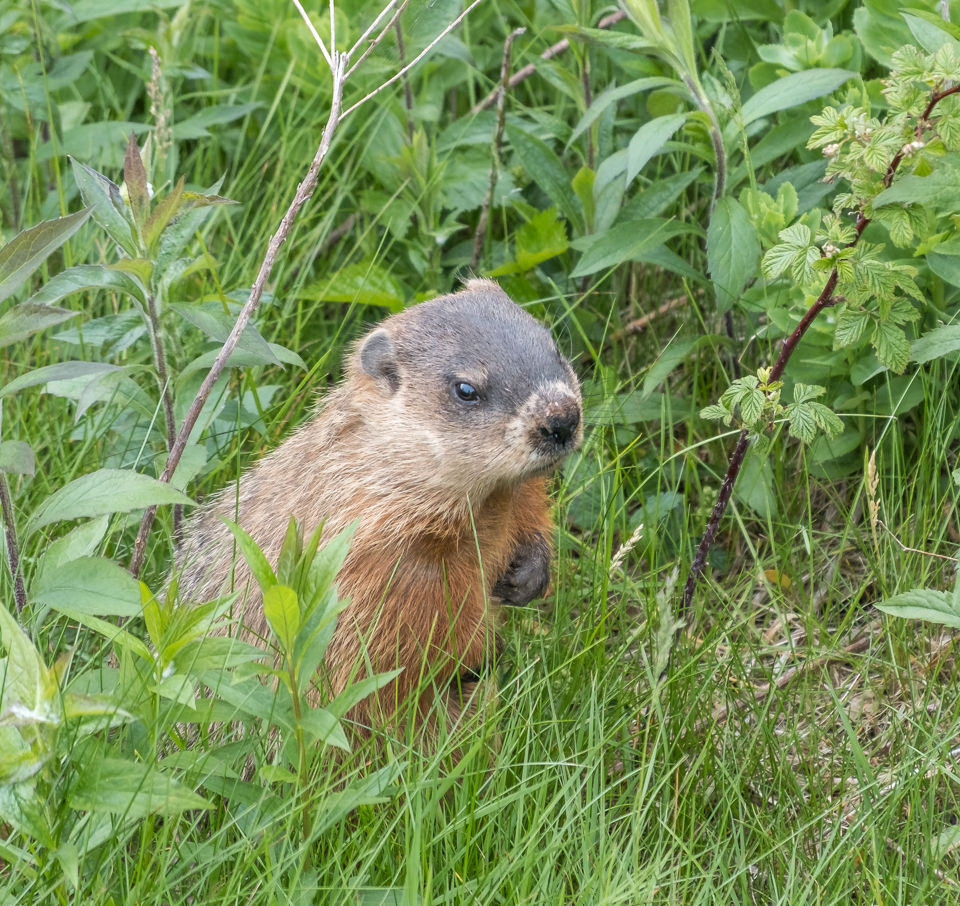
A marmot.

Herring Cove.


Then we drove to Sackville where we stayed in the Marshlands Inn. There were oodles of Victorian character homes, most having slipped into a mild state of disrepair. The ornate details and heritage charm were just my cup of tea.

Low tide, ships without water, but not for long.

Marshlands Inn was built in 1854.
June 11
The English founded Halifax in 1749. In 1755 they expelled over 12,000 French Acadians to over 13 colonies in the eastern US. In the mid 1700 to late 1800s, Gaelic immigrants from Scottland arrived.

Most mornings Brian and Denise went for a walk. They were early risers (5:00am). Not me. They graciously allowed me and Jancie to stay in bed till 7:00am. Patty and I also did a short walk this morning, before the 2-hour drive to Peggy's Cove.


Peggy's Point lightouse is the most photographed lighthouse in Canada. Too bad there were so many tourists.


A bagpiper entertained us. Most people in Nova Scotia are of Scottish heritage.


On the road again, 1:15-hours drive to Lunenburg.
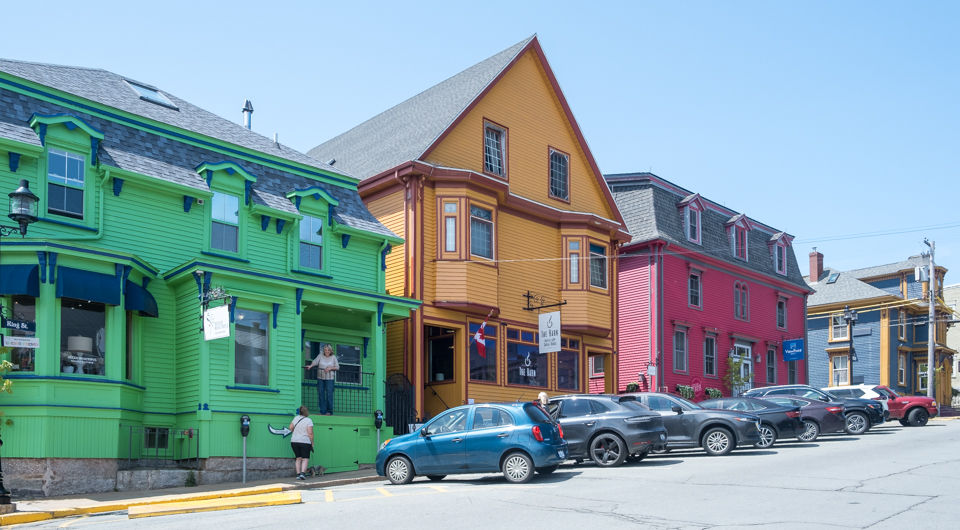
Lunenburg is a historic 18th century port town and a Unesco World Heritage site. The Maritimes are known for their brightly coloured houses. Why these bold colours? Apparently the law stated that they had to paint their house a different colour than their neighbours. The colours also made it easier for the fishermen to decipher which house was theirs after returning home from weeks at sea. And then its said that they were poor so they used leftover paint from the ships.


The Bluenose on our dime.

We just happened to be there at the right time to wittness the Blue Nose II coming in to dock. It is an exact replica of the Bluenose -- the famed schooner and undefeated champion in the International Fisherman's Races in 1921, 22, 23 & 31.


Patty in the pizza sign.


Lobster traps.


We spent the night at Zoe Homes that is rented out in the summer when university students are abscent. This is where Janice joined us. Packing and unpacking was a complex task, squishing luggage and groceries for five adults into this small car. Car rental for 4 weeks cost us $2800.00. Prices are high because of the short tourist season.
June 12

I took this photo through our university room's window.

After 4-hours of driving, we just happened to be in time for the Bay of Fundy bore tide (with only 10-minutes to spare). Two surfers were pushed forward by the rapidly approaching wave.


In the late 1800s boats took train cars across the Salmon River near Truro. After WWII automobiles quadrupled. The 214' deep Canso Causeway was then constructed. We visited the museum there where a local told us how the north side of the causeway froze in the winter but never the south side.

The beach in Inverness.

Patty & I were searching for sea glass. We got a bit jealous when we saw a few others walking with some blue sea glass in their bags. But we did find white, green and auburn.


The Sentier Skyline Trail in the Cape Breton Highlands
Stats: 9.4 km / 144m gain / 1:45 hours MT

This is a great hike to see the sunset. But the weather did not cooperate. Nevertheless, the different vegetation and ocean views were worth it. Juniper and stunted spruce made up much of the forest.


This rhododendron proved to be the predominant blooming plant on this trip.


I was confused when someone asked if we were going to do the Cabot trail. Why hadn't I heard about that trail? Then we found out they name their roads trails. So the road to the left is Cabot trail which was built in 1930.

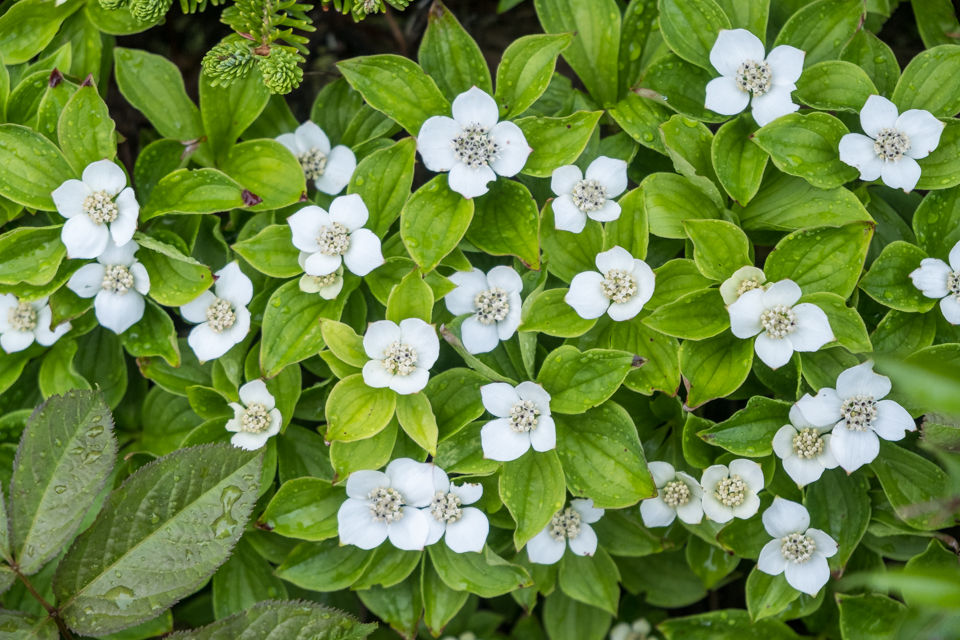
Bumbleberry


Spent the night in Cheticamp in Airbnb La Cale. Most of these vacation homes were equipped with 2 bedrooms, often with just double beds. My friends know I don't like to share a bed. So I took my airmattress. It ended up that Janice & I usually shared a room because the others woke up by 5:00am.
Thanks, Janice for taking turns with me to sleep on the floor. My mattress was comfy but often too cold. And there usually weren't enough blankets in these homes.
June 13
This was the first of three consecutive dark rainy days. This put a dent in some of our plans. We did not hike the Franey Trail as planned.

Chapstick Cove was in a remote area along the coast.

Meat Cove is where we turned the car around and drove back. There wasn't much there other than a campsite.

On display in a museum. We often visited museums on rainy days.

Spent the night at the ZZZ Moose Cabins which was a remote area in the forest.
June 14 - Fortress Louisbourg
This is a must see. The most interesting part was the staff who dressed and became the characters of way back then. Not once did they deviate from their character as Denise drilled them with questions. In fact the soldier even started to cry, leaving us wondering if that was an act or real?! We talked to the engineer, the soldier, the captain of a ship, the cook, the nanny, the servant and the marketer. Thankfully it wasn't too busy so we were able to have thorough conversations with each of them.
In 1713 the French inhabited this military stronghold for 50 years. It was mostly an international trading port and the base for their cod fishery. The main export was cod. It was low in fat so when salted and dried, could be preserved for up to two years and was often traded for rum. There was only one woman to every nine men and 3-4000 inhabitants. The nanny told us that most babies died after birth. The mother did not acknowlege the child till they were about 5 years old and less likely to die.

This port was locked in from January till April. About a quarter of the original buildings were recontructed on the original foundations.


During the 1745 & 1758 sieges, the English built artillary batteries on Lighthouse Point.


Spent the night at the Cranberry Cove Inn. It is a large Victorian house with slanted floors in our bedroom. The beds were too soft and saggy but they served a delicious included breakfast in their restaurant.
June 15 - ferry from North Sydney Nova Scotia to PF Aux Basques Newfoundland

The ferry on the right is only 3 years old. We had just enough time to get hot drinks from one of the many Tim Hortons before boarding.

We were on the ferry from 11:45am to 6:15pm. No that's not a window, its a screen.

This stylish bathroom even had a dog dish! This boat was more like a cruise ship than a ferry.
When we disembarked in Newfoundland where we spent the next 3 weeks, the dark clouds had lifted.
My first impression was of how remote it was. To be continued in The Maritimes, Part 2...


Enjoyed the tour, looks like a lot of history, great photos 🥰