
Costa Rica - week 1 of 3

February 5-13, 2026
Leaving our cold wet BC behind, we spent three weeks in one of the most biodiverse countries in the world. It boasts 352 bird species, 109 mammals and 346 plant species. It felt great to be soaking up the sunshine although most of us got a bit burnt the first few days. Unlike most trips with my Chilliwack Outdoor Club friends in which the primary part of the trip is hiking, this time we did not do more than moderate guided walks. This is because the temperatures and humidity were too high.We also did more water activities. We spotted many creatures and insects in their natural habitat, including all four species of monkeys.
A word of advise: rent a 4x4 vehicle, not the small low-to-the-ground car that we got stuck with because the vehicle we had reserved had not been returned yet. The roads can be really rough there.
We ended up driving 2030 km, starting in northwest Liberia, and making our way along the west coast almost to the border. Then we headed northeast, over the mountains to Tortuguero on the east coast. From there we drove northwest back to the coast.
Feb. 5-6

After a 4-hour night flight, we had a 4-hour layover in Toronto. Then another hour waiting on the tarmac where they defrosted the wings before take-off. After a second 5-hour flight to Libson, we picked up the rental car, stopped for groceries (which we ended up doing almost daily) and then spent the night at the Garden Apartments.
Feb. 7
This day we drove from 9:00am to 6:00pm. The speed limit was no more than 30 kph due to construction and a parade. It almost always took more driving time than what the GPS stated.
From Liberia we drove 25-minutes to Catarata Llanos de Cortez waterfalls which was only a 5-minute walk. It was a nice leg-stretcher before a long day of driving.

We all felt like sluggish sloths due to the humid (95%) hot temps (over 30C). It took ages to dry our clothes. Even my writing paper was damp. It took us a few days to acclimatize. Once we got to Quepos, there was some confusion, trying to find the La Laguna apartment for the next three nights (had the wrong name). We were relieved to have finally arrived but there was no one was at the reception desk. Denise was frustratingly trying to get in contact with the staff so she could get the code. Finally after about half of a very long hour, she got a phone call and we were in. Phew!
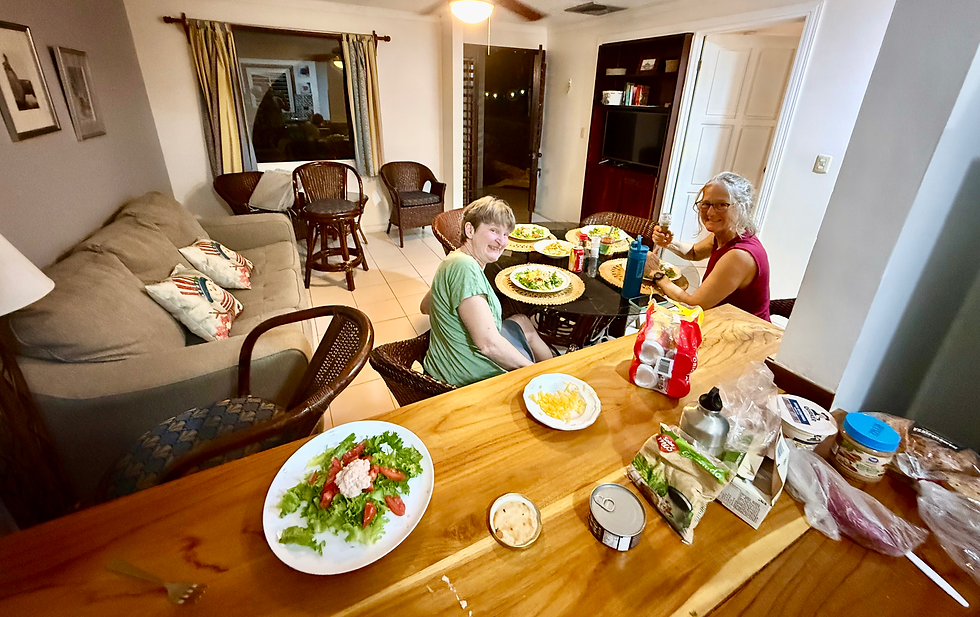
We didn't eat dinner till 9:00pm. After a few weeks we didn't want to see anymore tuna salad. We ate in restaurants only a few times, since more of our units had kitchens (and of course it was cheaper).
Feb. 8 - Manual Antonio National Park

These White-faced monkeys were hanging around in the early morning hours right behind our apartment.

Manuel Antonio NP

Viscovol Palms have very thin and hard thorns that look like needles.

Waves and wind lose energy as they pass through the mangrove roots. These roots are home to many species such as algae, fishes and mud crabs.


Looking at the peninsula of land.


The White-faced or Mono Cariblanco monkey is the smartest of the four species and is boldest with humans. They feed on insects, small animals and fruits.


Agoutes are the size of a cat.

Ixora - first pic

These Squirrel (or Titi) monkeys are the smallest species in Costa Rica. They are omnivorous and like to feed on bats. These two were doing a little more than just playing.


Terminte mounds.

A much needed rest at the viewpoint. We were getting over-heated after the 272 steps.

A typical meal.
Feb. 9

A ficus tree in the gardens at our apartment.

Torch Ginger Bougainvillea
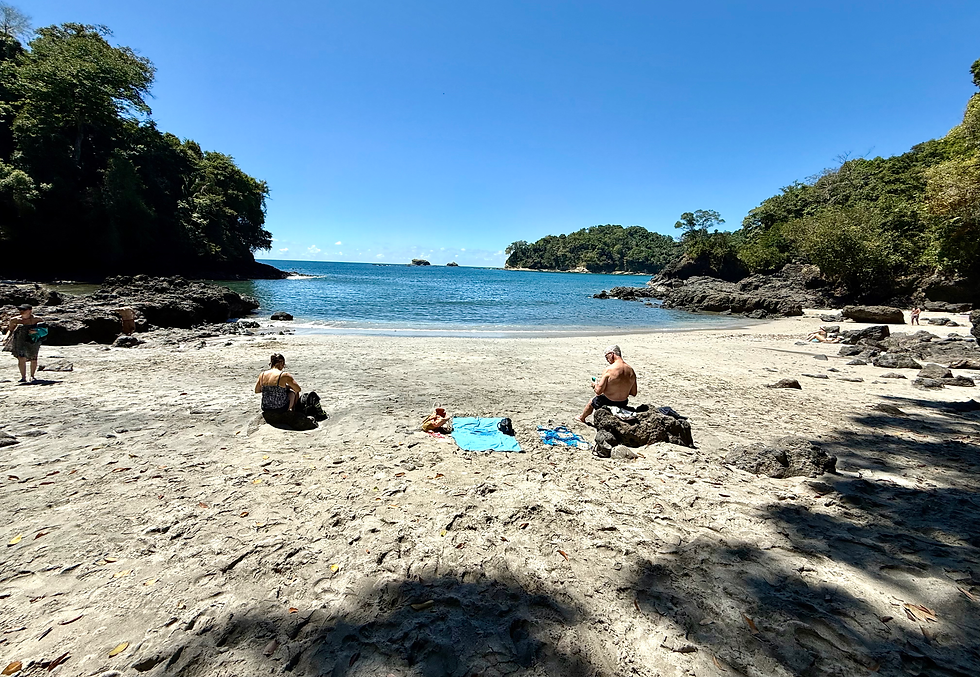
Playa Biesanz Beach where we hung out till mid-afternoon. It was peaceful and not too busy in this sheltered cove.


Male eguanas have the spikes on their back. Apparently they taste like chicken.


A second sloth sighting. Some of them end up having moss grow in their fur because they're so sedentary! In total we saw five sloths.


Feb. 10 -- Nauyaca Falls was a 6 km hike.


Parakeet flower
Sore-mouth bush Mexican Sunflower

Then we drove from 1:00-5:00pm to Puerto Jiminez for 3 nights.
Feb. 11 - Oasa Wild Tour in Corcovado National Park

We had to get up very early for this tour: 5:15am-2:30pm.
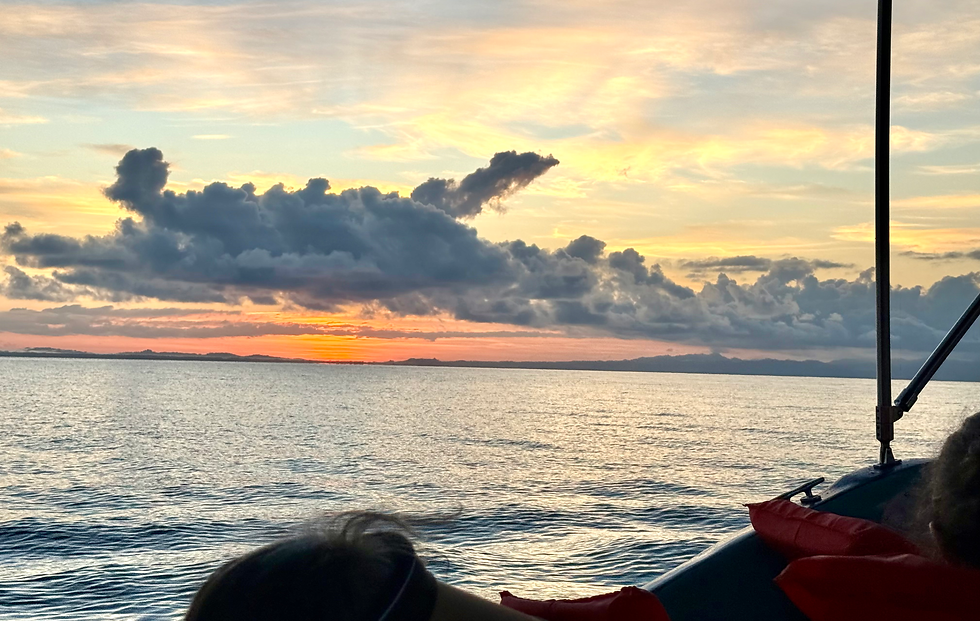
The sunrise was amazing! It was about 1.5 hours by boat.


By 1970 80% of Costa Rica's forests had been cut down. This tour took us through secondary forest. Most of the park is primary forest where trees are up to 86m high. They grow fast in the secondary forest where they have more light.
Cattail This Coati is drinking water from the tree. Coffee bush.
Most of the Coaties in this group are females with their young. Males eat 60% more so there aren't as many of them.

The tiny shining strip to the left of the center of this photo, are the eyes and snout of a crocodile. As we emerged from the forest I just saw it plunge with a heron clenched in it's powerful V-shaped jaws! Crocs hang out in the rivers but can also tolerate salt water.


An ant-eater with her baby. This photo was taken through the telescope.
A tiny orchid.

Look closely: a caiman crocodile. They live in fresh water streams and grow only up till 1.5m long whereas the larger crocodiles can grow up to 5m long.
Ficus trees grow from the top down on a host tree which they eventually kill.


A delicious lunch was supplied by the touring company.

We all stopped to listen when we heard the low-pitched loud roar of the Howler monkeys. It almost sounded like a lion. They stay high up in the tree canopy, never coming down to the ground. Their main diet is leaves which causes them to have a slow metabolism. They howl to alert their family of danger and to protect their territory from other members of their own species. Since different species are on different diets, they pose no threat. Their tail works like a fifth hand.

Wild turkeys.

A sea turtle.
Feb. 12 -- King Louis Falls by Matapolo Beach. The day before our guide, Carolina recommended this short hike. After driving for 1 hour on a gravel road past pastures, we did a 2 km walk through the resort village where the road was only fit for ATVs. Then it was a 7-minute hike on a trail to get to the falls.


A peccary, wild pig.

Hibiscus bushes.
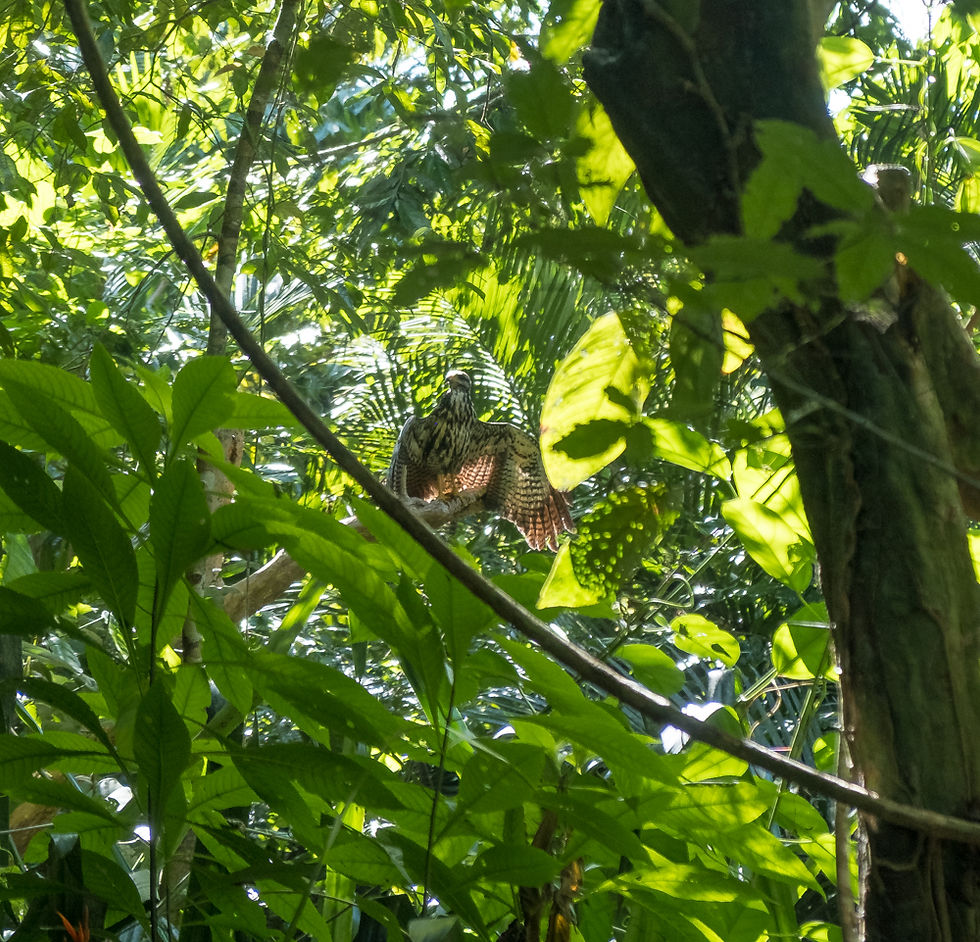
Common Black Hawk
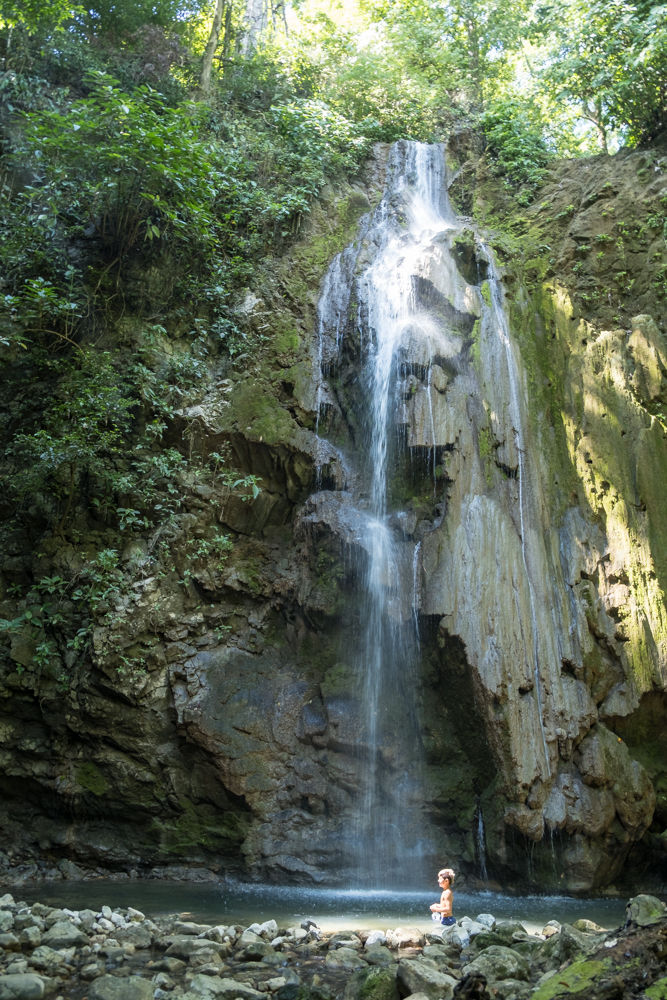
King Louis Falls.


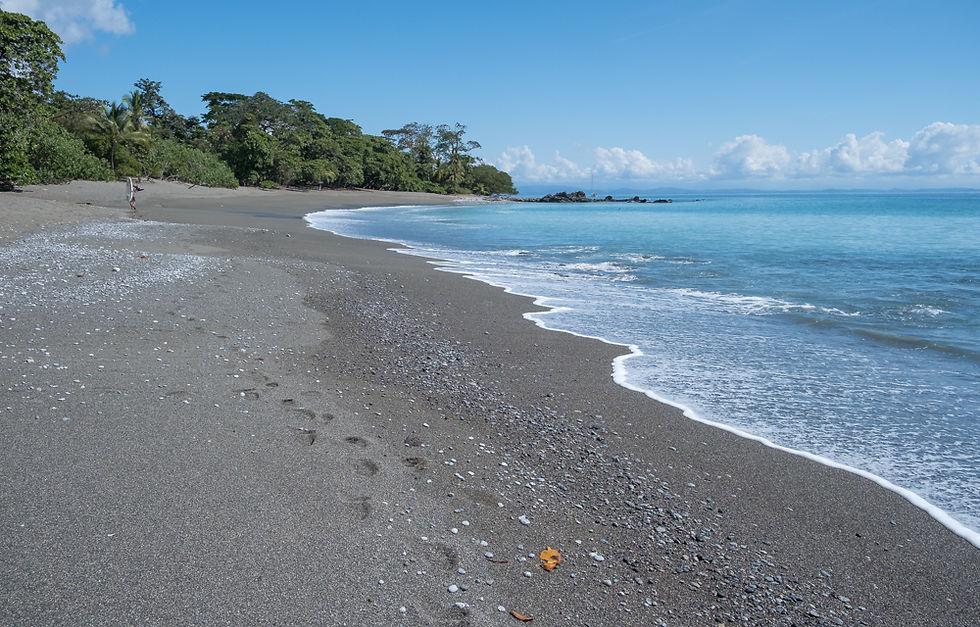
Matapalo Beach
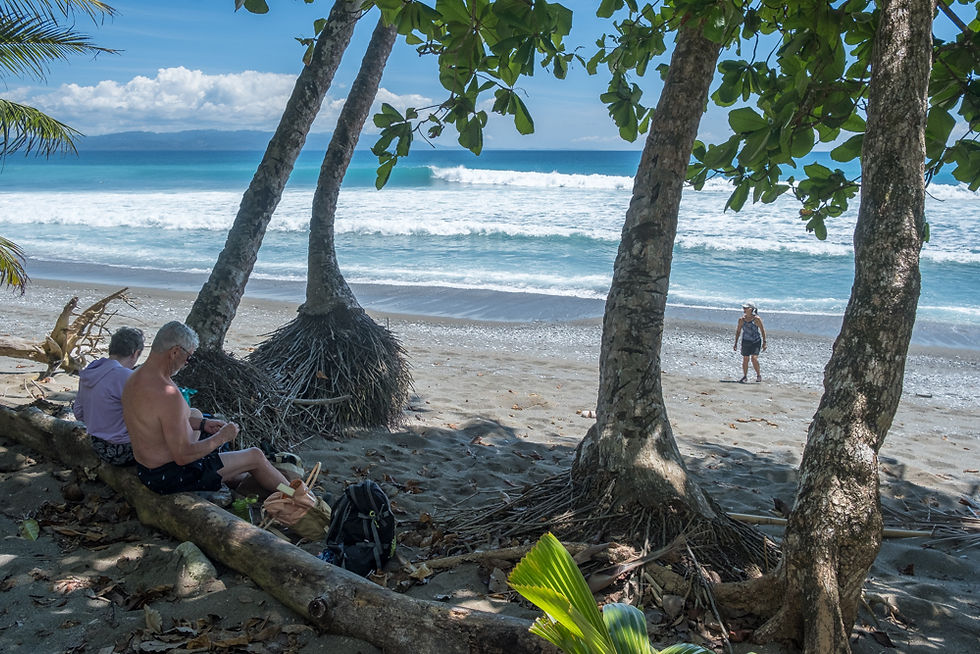
A surfer catching the wave.
False Bird of Paradise Red Ginger

These small cicadas were the cause of some very loud constant sounds. Like a vibrating electric hum.
Egret birds are never far from cattle. They pick the pesky bugs off of their backs.

Adventures Tropicales Golfo Dulces. We had much magical excitement on the bioluminescence tour from 4-7:00pm. It was a first time experience for me.


The tour started with scouting for dolphins but we did not see any. Our guide kept us entertained with information about the country.

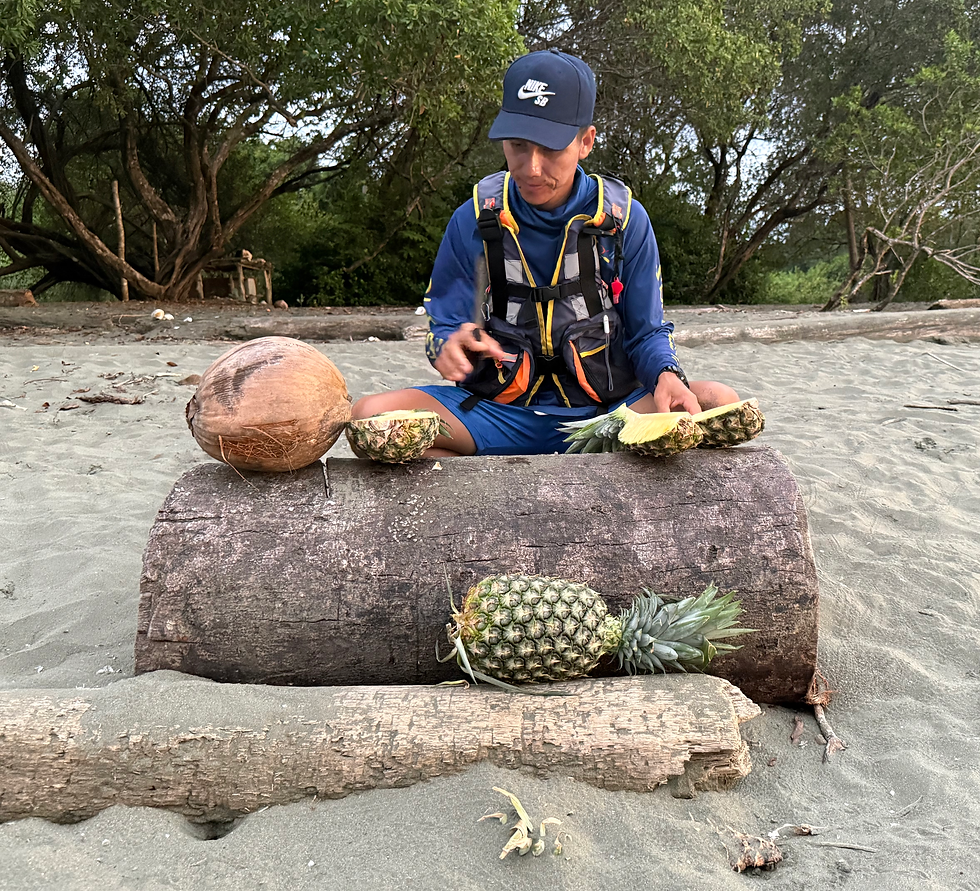
Our young guide was having a time of it, trying to open the coconut for us. Someone had taken off with his sharp sticks.

A beautiful sunset.


Group shot: Janice H, Irene & Simon H, Denise D & me


It wasn't till we put goggles on, went under the water and waved our hands like a wand, that we saw the sparkles like stars in the night.
Feb. 13 -- This was a driving day, from 8:00am - 4:30pm. The GPS sent us on a "highway" up to San Jose for 1 night. The other more popular route was slower due to construction. But we wonder. Because this road was very rough and steep. It was also windy and narrow in places. Twice Denise barely got the car up the gravel road.
As we gained height, the temperatures dropped. Colorful quaint 3-room houses hugged the hillsides. While we descended, views opened up of the massive city of San Jose crowded into a wide long valley. We had a fancy hotel for the night, Casa Miel Dulce Escapada en Paraiso which even had a laundromat.
Continued in week 2....


Comments